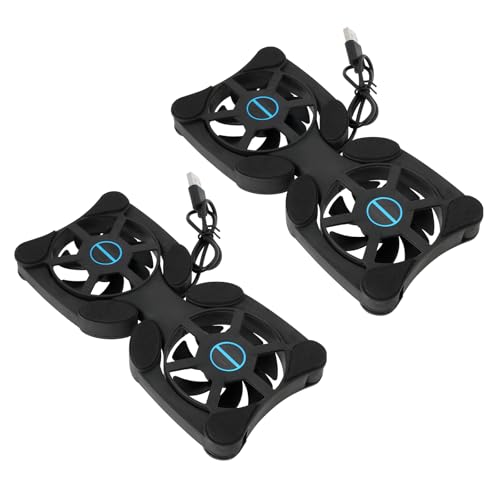
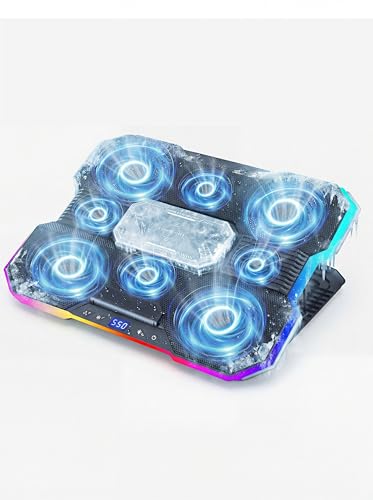
The category that fan cooling pads miss
Most laptop cooling pads assume a hot laptop. Add fans. Add airflow. Problem solved.
But a significant number of laptop users — particularly owners of thin-and-light machines, MacBook Air models, and ultrabooks — don't have an overheating laptop. They have a laptop that would run cooler with slightly better ventilation, and a wrist or neck angle that would be more comfortable with the laptop elevated.
A fan-based cooling pad for this use case is overkill: additional bulk, a USB port consumed, a power cable added, fan noise introduced. The ergonomic magnetic laptop stand is the non-fan answer: lift the laptop off the desk, improve the air gap under the chassis, and improve the viewing angle. No cable, no noise, no setup.
How passive cooling works
A laptop running against a flat desk surface has essentially zero air gap under its bottom panel. The heat generated by internal components conducts downward through the chassis and has nowhere to go. Elevating the laptop — even a centimeter — creates an air channel that allows convective cooling: warm air rises and escapes, cooler ambient air circulates in underneath.
For casual use, email, document work, and light browsing, this passive elevation is often sufficient to keep a slim laptop at comfortable operating temperatures without any active cooling.
Magnetic attachment and silicone construction
The stand attaches magnetically — grip your laptop, it adheres. Remove it, it releases cleanly. The silicone and stainless steel construction means it doesn't scratch the laptop surface, doesn't slip when positioned, and handles ambient heat from the chassis without deforming.
The dimensions: 1.57 × 1.57 × 1.1 inches per unit, weighing 1.23oz. This is a pocket-sized product. It fits in a laptop bag side pocket, a jeans pocket, or a laptop sleeve. For users who need portable cooling support during travel or in varied work environments — coffee shops, libraries, client offices — the form factor is the point.
For whom fans are wrong
There's a real use case for passive cooling stands that active-fan reviews rarely acknowledge. If you own:
- A MacBook Air (fanless or near-fanless under normal loads)
- A thin-and-light ultrabook where the primary heat output is low under everyday use
- A convertible or tablet-mode device where fan noise is inappropriate
- A laptop used primarily for writing, browsing, or light productivity
— then a multi-fan gaming cooling pad is solving a problem you don't have, while adding cable clutter and noise you don't want. The ergonomic magnetic stand solves the actual problem: better air circulation, better ergonomic angle, and portability.
4.5 stars at 601 reviews
A 4.5-star average from 601 reviews for a simple, passive product is a strong signal. The product does what it says, buyers are happy, and the concept is validated. The consistent praise across reviews: it's small enough to carry everywhere and makes a noticeable difference on desks where the laptop was previously sitting directly on a surface.
Who should buy this
MacBook Air and ultrabook owners. These machines generate less heat than gaming laptops and cool primarily through ventilation gaps in their chassis. Elevating them passively is often all they need.
Frequent travelers and mobile workers. Pocketable. No power cable. Works anywhere.
Anyone who wants better ergonomics without cooling infrastructure. Elevating the laptop improves screen angle and reduces wrist extension, independent of any thermal benefit.
Bottom line
This is not a gaming cooling pad. It doesn't belong in the same conversation as the llano V12, the Razer Adaptive, or the ICE COOREL K10. It belongs in the conversation for people who have a light laptop, use it for everyday tasks, want better airflow and ergonomics, and don't want to add bulk, cables, or noise to their setup. For that user, it's the right answer.